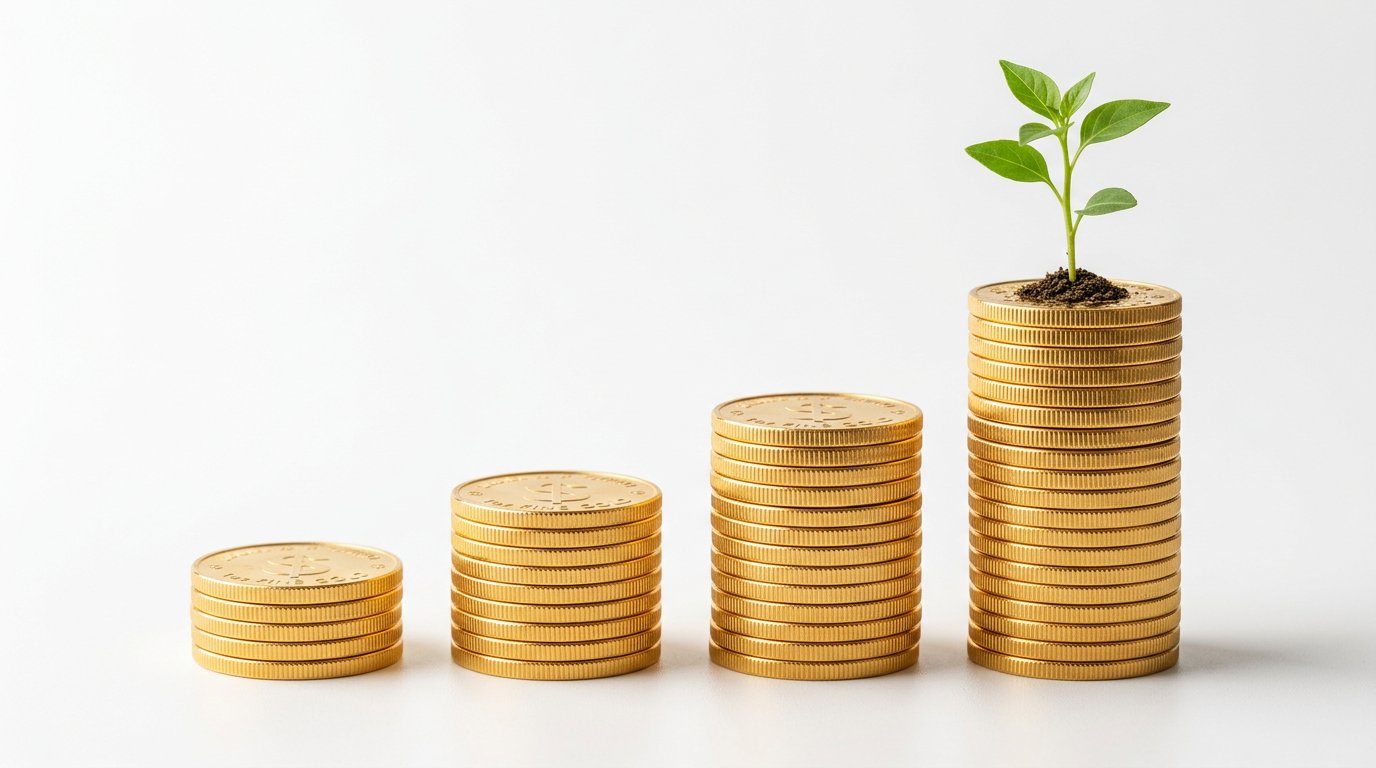
Most people imagine that wealth is built by a single excellent decision: a stock bought at the right moment, a property in the right neighbourhood, a bonus invested at the bottom of a crash. In reality, the portfolios that quietly turn into real money over twenty years are almost always unremarkable mutual fund accounts funded on a schedule and left alone. The magic is not in the selection. It is in the arithmetic of compounding meeting the discipline of consistency.
A mutual fund pools money from thousands of investors so a professional manager can buy a diversified basket of securities on their behalf. You own units of the pool, not individual positions, which means a single company's bad quarter does not define your year. That structural diversification is the first quiet advantage: it removes the emotional rollercoaster of watching one holding collapse and replaces it with the smooth, aggregated performance of hundreds of businesses at once.
The second advantage is automatic reinvestment. When a fund distributes dividends or capital gains, you can choose to have them repurchased rather than paid out. Those additional units then earn returns of their own, and the cycle repeats. Over a ten-year horizon this effect can add several percentage points to your total outcome, purely because your money never leaves the building. It is the difference between a saver and a compounding investor.
Fees matter more than most investors realise, and they compound just as aggressively as returns. A one percent annual expense difference on a $100,000 portfolio can cost well over $30,000 across two decades. Index funds and low-cost actively managed funds are therefore not a boring choice; they are a mathematically superior starting point for anyone whose goal is long-term accumulation rather than short-term speculation.
Behaviour is the third and most underrated ingredient. Study after study finds that the average investor underperforms the very funds they own, because they buy after strong performance and sell after weakness. A systematic monthly contribution removes that decision entirely. You buy more units when prices fall and fewer when they rise, which quietly lowers your average cost per unit — a process known as dollar-cost averaging, and the closest thing to a free lunch in personal finance.
Think about what a realistic twenty-year plan actually looks like. Contributing $500 a month at a 7 percent average annual return produces roughly $260,000. Increase the contribution by just $100 and the figure climbs past $310,000. Nothing about the strategy changed — no clever timing, no hot fund. The variables that matter are the amount, the time and the persistence, and all three are entirely within your control.
That does not mean mutual funds are risk-free. Equity funds can fall 20 to 35 percent in a bad market, and anyone investing should be prepared to see red numbers for extended periods. The remedy is matching your fund mix to your actual timeline: money needed in two years belongs in short-duration or money market funds, while money needed in twenty years can reasonably ride out equity volatility. Asset allocation, not fund picking, drives the majority of long-term outcomes.
It also helps to review the portfolio once a year rather than once a week. Rebalancing back to your target mix forces you to trim what has performed well and add to what has lagged, which is disciplined selling high and buying low without ever needing to predict a market top. Set a calendar reminder, review the allocation, adjust contributions if your income changed, then close the laptop.
The conclusion is almost anticlimactic: pick a diversified, low-cost fund family, automate contributions, reinvest distributions, keep fees low, review annually and leave the rest alone. Wealth built this way will never make an exciting dinner story. It will, however, show up reliably in your account statement — which is exactly the point. If you want help structuring a plan around your own timeline, our advisors are happy to walk through the numbers with you.